I married a lonely elderly woman for her money and a roof over my head. But after her funeral, her attorney gave me a box and said, “She told me this is what you truly wanted.”
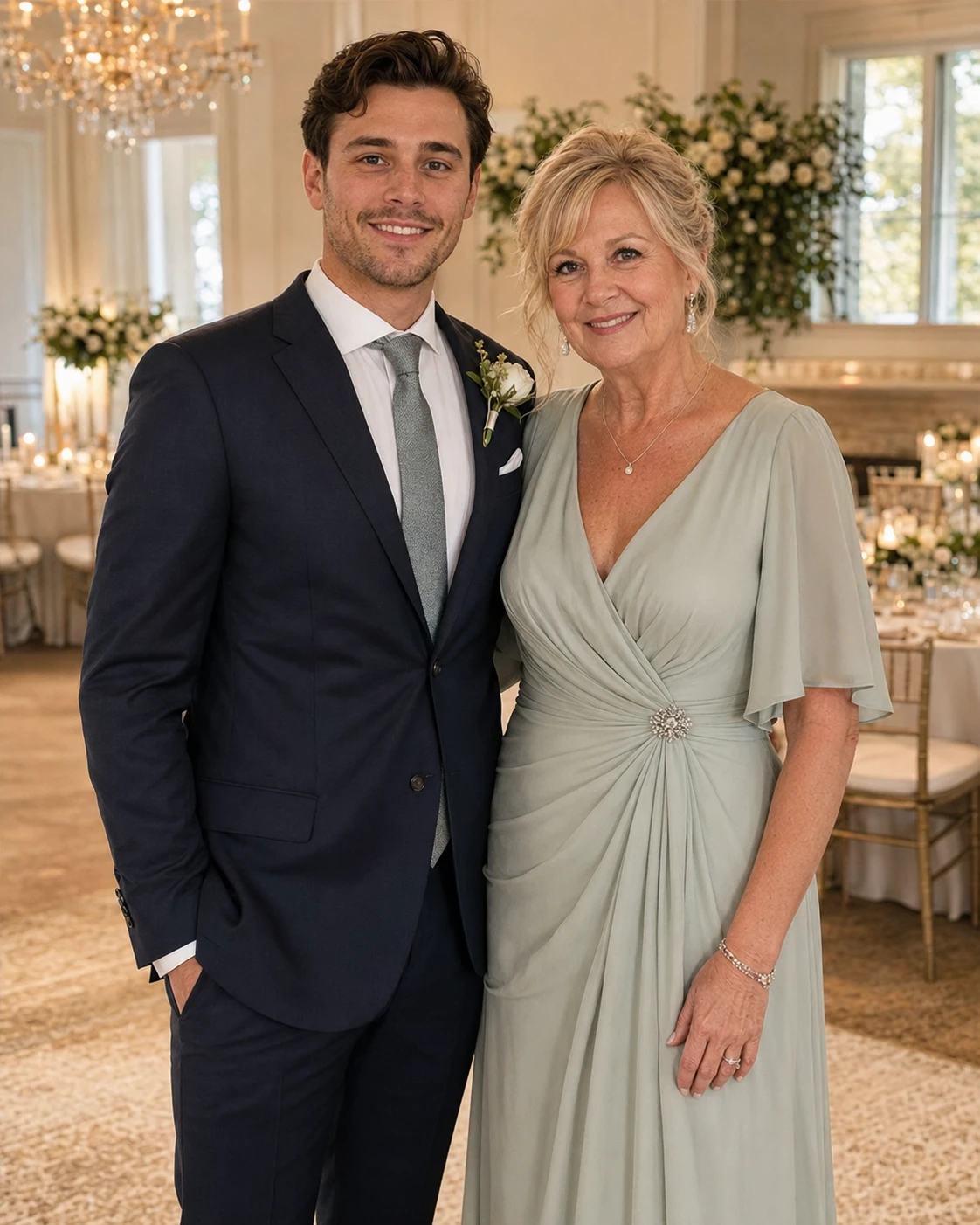
When I married Evelyn, I was twenty-five, broke, buried in debt, and sleeping in my truck behind a grocery store.
She was seventy-one. A widow. Soft-spoken. She owned a comfortable house in a quiet neighborhood.
And no, I did not marry her because I loved her.
I told myself I was just trying to survive. Stay for a few years, act like a devoted husband, inherit the house someday, and finally escape the life I was trapped in.
I never believed Evelyn could see through me.
But while I was secretly counting the days, she treated me with more kindness than I deserved.
She made dinner every night. She bought me new boots when my old ones fell apart. She left a warm winter coat by the front door after noticing mine could barely button.
“You’ll freeze wearing that,” she said like it was nothing.
And the worst part?
I barely cared.
The truth was, I never truly saw Evelyn as my wife. I saw her as a countdown.
Every doctor’s appointment made me pay attention. Every pill bottle on the counter reminded me that someday, everything in that house might belong to me.
I know how awful that sounds now.
But back then, I convinced myself I was being smart.
Then one morning, Evelyn collapsed in the kitchen. Three days later, she was gone.
At the funeral, her relatives looked at me like I was dirt.
“Gold digger.”
“He finally got what he wanted.”
And honestly, part of me thought I had.
But when the lawyer read the will, my stomach sank.
The house went to her niece. Most of her money went to charity.
I got nothing.
Then the lawyer set an old shoebox on the table in front of me.
My name was written across the lid in Evelyn’s neat handwriting.
I frowned. “What is this?”
The lawyer looked at me calmly and said, “She said this is what you truly wanted.”
My hands trembled as I opened the box.
And the first thing inside made my whole body go cold.
Preview
Part 2
The first thing inside the shoebox was a photograph.
Not money.
Not a deed.
Not a key to some secret bank account.
Just a photograph.
My hands shook as I lifted it from the box. It showed me standing in front of a grocery store three years earlier, sleeping in my truck. My beard was untrimmed. My eyes looked hollow. The driver’s side window was cracked.
I stared at it in confusion.
“How did she get this?”
The lawyer remained silent.
Beneath the photograph was another picture.
Then another.
And another.
Each one documented pieces of my life from before I met Evelyn.
The truck.
The shelter where I sometimes showered.
The diner where I spent entire nights drinking cheap coffee because I had nowhere else to go.
I felt my throat tighten.
The photographs were arranged in order, like someone had carefully assembled the story of my downfall.
Then I noticed an envelope.
My name was written across the front.
I opened it slowly.
Inside was a handwritten letter.
The date at the top was six months before our wedding.
“Dear Daniel,”
“If you are reading this, then I am gone.”
My chest tightened instantly.
“You probably think I never knew why you married me.”
I stopped breathing.
The lawyer quietly folded his hands.
“But I knew.”
Three words.
Three simple words.
Yet they hit harder than any punch I had ever received.
I read the sentence again.
And again.
“I knew.”
The room suddenly felt too small.
My heart hammered against my ribs.
The shame I had spent years avoiding began crawling up my spine.
The letter continued.
“I knew you needed a home.”
“I knew you needed safety.”
“And I knew you believed I was too lonely to notice the difference between love and survival.”
My eyes burned.
Evelyn had known from the beginning.
Every smile I forced.
Every affectionate gesture.
Every promise I made.
She had seen through all of it.
And somehow she had stayed anyway.
I continued reading.
“People think loneliness makes us blind. Sometimes it does the opposite.”
“Lonely people become experts at seeing things others miss.”
A tear landed on the page.
I quickly wiped it away.
I hadn’t cried during the funeral.
I hadn’t cried at the hospital.
But now I could barely see the words.
The next item inside the box was a small notebook.
Its cover was faded blue.
I opened it carefully.
Every page contained journal entries.
Not about herself.
About me.
The first entry described the day we met.
“He smiled politely, but his eyes never stopped searching for exits.”
Another entry.
“He pretends not to be hungry and always leaves food on his plate. I think he grew up without enough to eat.”
Another.
“Bought him new boots today. He thanked me three times. Nobody thanks that many times unless they are used to receiving nothing.”
I swallowed hard.
Each page revealed details about me I never realized anyone noticed.
Not even my own parents had paid that much attention.
For years I believed Evelyn was the person being used.
Now I wasn’t so sure.
Because every entry carried the same heartbreaking theme.
She wasn’t documenting my lies.
She was documenting my pain.
The deeper I read, the worse I felt.
Then I reached the final pages.
The entries became shorter.
Her handwriting shakier.
Her health was already failing.
“He laughed today while fixing the fence.”
“I haven’t heard that laugh before.”
“I hope one day he hears it more often.”
My vision blurred completely.
The final entry nearly broke me.
“I don’t think Daniel realizes he deserves to be loved.”
“Maybe someday he will.”
I lowered the notebook.
For several minutes I couldn’t speak.
The lawyer finally slid another envelope across the table.
“There is one more thing,” he said quietly.
I looked at him.
“What is it?”
His expression softened.
“Evelyn instructed me not to give it to you until you finished reading everything.”
The envelope was thick.
Heavy.
And whatever was inside would change the rest of my life.
Part 3
My fingers trembled as I opened the final envelope.
Inside was a single document.
At first, I didn’t understand what I was looking at.
Then my eyes found the number.
My breath caught.
The figure was larger than anything I had ever imagined owning.
I stared at it.
Looked away.
Then looked back again.
“Is this real?” I whispered.
The lawyer nodded.
“It is.”
The document revealed the existence of a private trust Evelyn had established years earlier.
One that nobody in her family knew existed.
One that had never appeared in the public reading of her will.
My name was listed as the sole beneficiary.
I looked up in shock.
“But the house went to her niece.”
“Yes.”
“The money went to charity.”
“Yes.”
“Then why—”
The lawyer interrupted gently.
“Because Evelyn wanted to make sure nobody believed you inherited her wealth.”
I sat frozen.
He continued.
“She knew what people thought about your marriage.”
The room fell silent.
“She also knew what you thought about yourself.”
I looked down.
For the first time, I understood.
This wasn’t about money.
It never had been.
The trust contained enough to erase my debts, buy a home, and live comfortably.
But attached was one final letter.
I unfolded it carefully.
“Daniel,”
“If you are reading this, then you stayed until the end.”
“Not because you had to. Because you could have left many times.”
My chest tightened.
She was right.
I could have left.
Hundreds of times.
Yet somehow I never did.
The letter continued.
“I know our marriage did not begin with love.”
“But somewhere along the way, I stopped feeling alone.”
Tears rolled freely now.
“You sat beside my hospital bed.”
“You watched terrible movies with me.”
“You fixed the fence, planted flowers, and shoveled snow from my driveway before I even asked.”
“Those things matter.”
I remembered every one of those moments.
Moments I had dismissed as obligation.
Moments she had treasured.
“You spent years believing you were taking from me.”
“The truth is that you gave me something my money never could.”
“You gave me company.”
I covered my face.
The grief finally hit with full force.
Not because I had lost an opportunity.
Not because I had lost an inheritance.
Because I had lost Evelyn.
The woman I never allowed myself to fully appreciate while she was alive.
The woman who had understood me better than anyone ever had.
The final paragraph nearly shattered me.
“This trust is not a reward.”
“It is not payment.”
“It is a second chance.”
“Use it to build the life you were always searching for.”
“And when you finally believe you deserve happiness, think of me.”
“Love, Evelyn.”
I cried harder than I had ever cried in my life.
Months passed.
Then years.
I paid every debt.
Bought a modest house.
Started a small construction company.
Nothing extravagant.
Nothing flashy.
Just honest work.
The kind of life I once thought was impossible.
But the most important thing I did came three years later.
I opened a housing program for people living out of their vehicles.
People exactly like the man in those old photographs.
Every resident received a small welcome box.
Inside was a blanket.
A warm coat.
A grocery gift card.
And a handwritten note.
The same kindness Evelyn once showed me.
Today, one photograph hangs in my office.
It’s the picture of my old truck behind the grocery store.
Visitors often ask why I keep it there.
I always smile.
Because they see a homeless man who got lucky.
I see something different.
I see the day a lonely old woman looked at a broken young man and recognized his worth long before he ever could.
And every time I pass that photograph, I remember the greatest inheritance Evelyn left me.
Not the money.
Not the trust.
Not the second chance.
The belief that even someone as selfish as I once was could still become someone better.
And that gift was worth more than everything else she owned.