PINARUSAHAN AT IBINILAD SA ARAW NG GURO ANG BATANG WALANG PAMBAYAD SA ESKWELA — PERO NANG MALAMAN NIYA KUNG
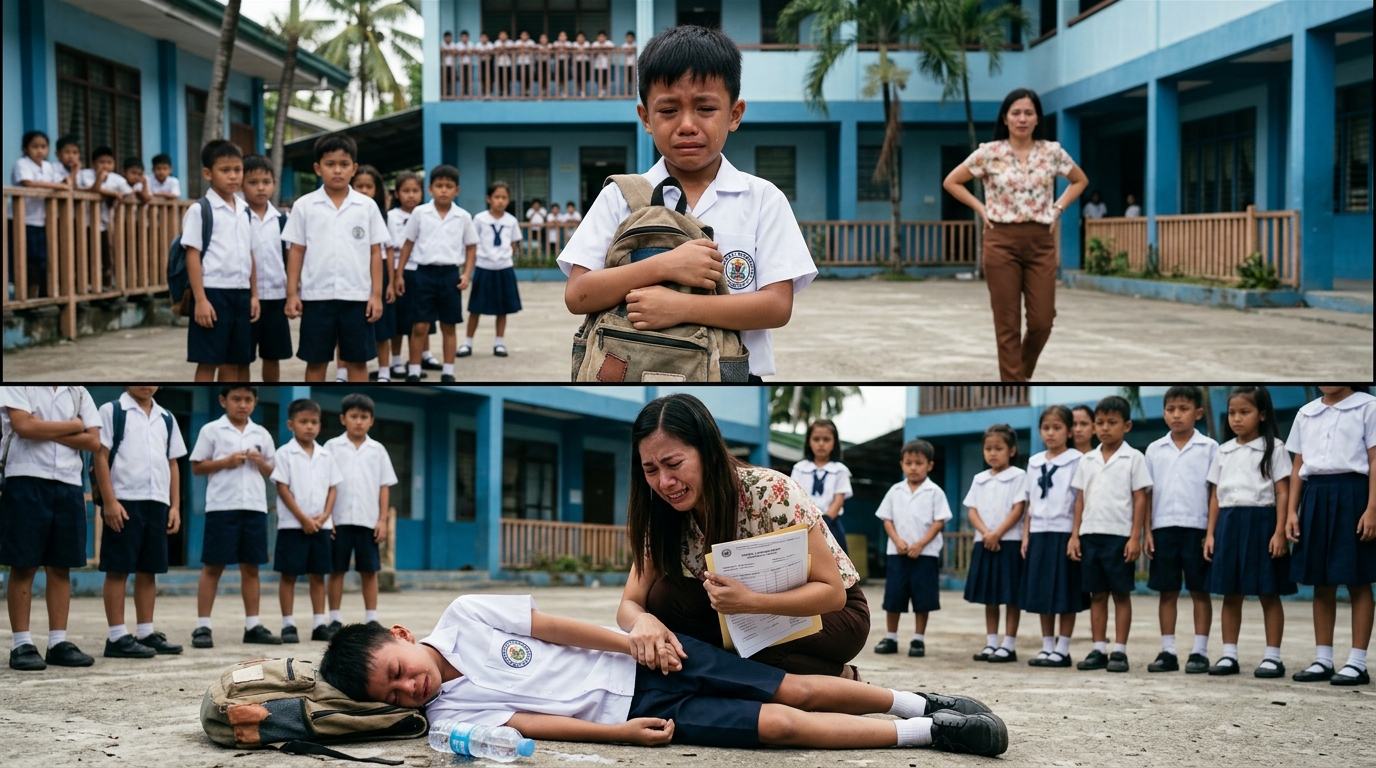
PINARUSAHAN AT IBINILAD SA ARAW NG GURO ANG BATANG WALANG PAMBAYAD SA ESKWELA — PERO NANG MALAMAN NIYA KUNG BAKIT ITO NAG-IIPON, HUMAGULGOL SIYA AT NIYAKAP ANG BATA SA HARAP NG WATAWAT!
ANG BATANG LAGING WALANG MAIAMBAG
Sa loob ng silid-aralan ng Grade 4-Mabini, kilala si Teacher Agnes bilang pinakamahaligpit at pinakamasungit na guro. Para sa kanya, ang patakaran ay patakaran. Kung may ambagan para sa proyekto, kailangang magbayad ng lahat.
Ngunit palaging may isang estudyanteng sumisira sa kanyang perpektong record—si Mateo.
Si Mateo ay siyam na taong gulang, isang batang lalaki na palaging nakayuko. Ang kanyang uniporme ay kupas at maluwag, at ang kanyang sapatos ay nakanganga na at tinalian lamang ng goma. Araw-araw, tahimik lang siyang pumapasok, hindi nakikipaglaro, at madalas ay nakikita ni Teacher Agnes na palihim na nagbibilang ng mga pisong barya sa isang sulok tuwing recess, bago ito ibalik sa isang lumang lata ng sardinas na ginawa niyang alkansya.
Isang Biyernes, huling araw ng bayaran para sa ‘Field Trip and Project Contribution’ na nagkakahalaga ng limandaang piso. Tinawag ni Teacher Agnes si Mateo sa harap ng klase.
“Mateo, nasaan na ang bayad mo? Ikaw na lang ang hindi nagbabayad sa buong klase!” mataray na sita ng guro, nakapameywang.
Yumuko si Mateo, nanginginig ang mga kamay. “T-Teacher… wala po akong pera. Pasensya na po…”
Nagdilim ang paningin ni Teacher Agnes. “Walang pera?! Araw-araw kitang nakikitang nagbibilang ng barya sa lata mo! Huwag mo akong gawing tanga, Mateo! Nagsisinungaling ka pa! Siguro ipinambibili mo lang ng mga walang kwentang laruan ang baon mo kaya hindi ka makapagbayad!”
“H-Hindi po, Teacher… kailangan ko po talaga ‘yung barya…” lumuluhang sagot ng bata.
ANG MALUPIT NA PARUSA SA ILALIM NG ARAW
Dahil sa inis at upang gawing “leksyon” sa buong klase ang nangyari, hinawakan ni Teacher Agnes si Mateo sa braso at kinaladkad palabas ng silid-aralan.
Tirik na tirik ang araw nang dalhin niya ang umiiyak na bata sa gitna ng malawak na quadrangle, eksakto sa ilalim ng matayog na flagpole.
“Diyan ka tatayo! Huwag na huwag kang aalis diyan at huwag kang papasok sa klase ko hangga’t hindi mo natututunang maging responsable at magsabi ng totoo!” malupit na utos ni Teacher Agnes. “Bilad sa araw para matunaw ‘yang katigasan ng ulo mo!”
Iniwan niya si Mateo sa gitna ng initan. Tinitingnan ang bata ng mga dumadaang estudyante at pinagtatawanan. Basang-basa na ng pawis ang kupas na uniporme ni Mateo, ngunit hindi siya umalis. Nakatayo lamang siya nang tuwid, yakap-yakap ang kanyang maruming bag, habang tahimik na tumutulo ang kanyang mga luha na mabilis ding natutuyo dahil sa matinding sikat ng araw.
Lumipas ang isang oras. Dalawang oras.
Pagsapit ng tanghali, habang kumakain si Teacher Agnes sa kanyang desk, nakarinig siya ng malakas na sigawan mula sa labas.
“Teacher! Teacher! Si Mateo po, hinimatay!” tili ng isang estudyante.
ANG PAGBAGSAK AT ANG NATUKLASANG SIKRETO
Nabitawan ni Teacher Agnes ang kanyang hawak na tinidor at mabilis na tumakbo palabas. Pagdating niya sa quadrangle, nakita niya si Mateo na nakabulagta sa mainit na semento, walang malay, at namumutla ang mga labi.
Nataranta ang guro. Lumuhod siya sa mainit na sahig at tinapik-tapik ang pisngi ng bata. “Mateo! Gumising ka! Diyos ko, Mateo!”
Mabilis niyang binuksan ang maruming bag ni Mateo upang maghanap ng alcohol, tubig, o ID para matawagan ang mga magulang nito. Ngunit pagkabukas niya ng bag, walang laman na pagkain o tubig.
Sa halip, gumulong palabas ang lumang lata ng sardinas na palaging hawak ni Mateo.
Bumagsak ang lata at kumalat ang mga pisong barya sa semento. Kasama ng mga barya, nahulog ang isang lukot na resibo ng gamot at isang kapirasong papel na pinunit mula sa isang lumang notebook.
Kinuha ito ni Teacher Agnes. Nang basahin niya ang nakasulat na mensahe sa papel, tila tumigil ang pag-ikot ng kanyang mundo. Ang sulat ay naka-address sa kanya.
We have 117 new singles for you
“Dear Teacher Agnes,
Pasensya na po kung hindi pa ako makapagbayad. Nakaipon na po sana ako ng bente pesos pambigay sa inyo kahapon. Kaso po, umubo po ng dugo si Nanay kagabi. Wala na po si Tatay kaya ako na lang po ang bumibili ng gamot niya para sa baga niya. Ibinili ko po muna ng gamot yung naipon ko galing sa pagpu-pulot ng bote. Wag niyo po sana akong paalisin sa eskwela. Gusto ko po kasing makatapos para mapagamot ko si Nanay balang araw. Pangako po, babayaran ko kayo kapag nakapulot po ako ng maraming bote ngayong gabi.
— Mateo.”
Tiningnan ni Teacher Agnes ang resibo. Ang gamot ay nagkakahalaga ng bente pesos—isang murang antibiotic na binili sa pinakamaliit na botika. Ang mga baryang pinagbibilangan ni Mateo araw-araw ay hindi para sa laruan o kendi. Ito ang bumubuhay sa kanyang naghihingalong ina.
ANG MGA LUHA NG PAGSISI
Nanginig ang mga kamay ni Teacher Agnes. Parang piniga ang kanyang puso nang mapagtanto niya kung gaano siya naging kalupit. Ang batang ininsulto niya, pinagbintangang sinungaling, at ibinilad sa araw ay isang siyam na taong gulang na bayani na pumapasan ng responsibilidad na hindi dapat pasan ng isang bata.
Biglang nagmulat ng mga mata si Mateo. Umuubo siya dahil sa sobrang init at uhaw. Nang makita niya si Teacher Agnes na may hawak ng kanyang lata at sulat, pilit siyang bumangon kahit nanginginig.
“T-Teacher… p-pasensya na po… nahulog po yung pera ni Nanay…” humihikbing sabi ni Mateo, pilit na pinupulot ang mga nagkalat na barya sa mainit na semento kahit hirap na hirap siya. “P-Patawad po… babayaran ko po kayo…”
Hindi na napigilan ni Teacher Agnes. Isang napakalakas na hagulgol ang lumabas mula sa kanyang dibdib.
Wala siyang pakialam kung marami ang nakatingin. Wala siyang pakialam sa kanyang imahe bilang masungit na guro. Mabilis siyang lumapit kay Mateo at niyakap nang napakahigpit ang maliit at pawisang bata sa harap ng watawat.
“Patawarin mo ako, anak… Patawarin mo si Teacher…” umiiyak na sigaw ni Teacher Agnes habang hinahaplos ang buhok ni Mateo. “Wala kang utang sa akin! Ako ang may utang sa’yo… utang ko sa’yo ang buhay na ito dahil tinuruan mo ako kung ano ang totoong halaga ng tao.”
Nagulat ang buong eskwelahan. Ang mga kapwa guro at estudyante na nanonood sa paligid ay hindi napigilang lumuha nang makita ang eksenang iyon. Ang pinakamatapang na guro ay nakaluhod, umiiyak, at humihingi ng tawad sa isang batang pulubi.
ANG SIMULA NG BAGONG PAG-ASA
Mula araw na iyon, nagbago nang tuluyan si Teacher Agnes. Dinala niya si Mateo sa ospital at siya mismo ang nagbayad para sa pagpapagamot ng ina nito. Hindi lamang iyon, sinagot niya ang lahat ng pangangailangan ni Mateo sa eskwela—mula sa bagong uniporme, sapatos, baon, at lahat ng bayarin.
Naging adbokasiya ni Teacher Agnes ang pagtulong sa mga mahihirap na estudyante. Hindi na siya naniningil ng pilit para sa mga bayarin sa eskwela, sa halip, nagtayo siya ng isang pondo mula sa sarili niyang bulsa at sa mga donasyon para tulungan ang mga batang katulad ni Mateo.
Lumaki si Mateo na isang matalino at mabuting bata. At pagkalipas ng dalawampung taon, siya ay bumalik sa eskwelahang iyon—hindi na bilang isang batang walang pambayad, kundi bilang isang sikat na doktor na nagbibigay ng libreng medical mission para sa mga mahihirap na estudyante at kanilang mga pamilya, kasama ang kanyang pangalawang ina, si Teacher Agnes.
MORAL NG KWENTO:
Huwag kailanman manghusga o magparusa nang hindi inaalam ang buong kwento ng isang tao. Minsan, ang mga taong inaakala nating pabaya o nagkukulang ay sila pa ang humaharap sa pinakamabibigat na laban sa buhay. Ang pagiging guro, o pagiging isang mabuting tao, ay hindi lamang nasusukat sa pagsunod sa mga patakaran, kundi sa pagkakaroon ng habag, pang-unawa, at pusong handang makinig sa mga tahimik na daing ng mga taong walang boses sa lipunan. Ang isang maling husga ay nakakasira ng kinabukasan, ngunit ang isang yakap ng pang-unawa ay nakapagliligtas ng buhay.